PortAudio backend for DSPNetwork. More...
#include <Resonant/AudioLoopPortAudio.hpp>
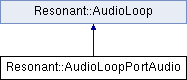
Public Member Functions | |
| AudioLoopPortAudio (DSPNetwork &dsp, const std::shared_ptr< ModuleOutCollect > &collect) | |
| Creates a new audio IO object. | |
| virtual bool | isRunning () const |
| Check if the audio IO is operational. | |
| virtual std::size_t | outChannels () const |
| Returns the number of output channels in the current setup. More... | |
| virtual bool | start (int samplerate, int channels) |
| Start the AudioLoop. More... | |
| virtual bool | stop () |
| Stop the audio processing. | |
| virtual | ~AudioLoopPortAudio () |
| Deletes an audio IO object. | |
Static Public Member Functions | |
| static void | setDevicesFile (const QString &xmlFilename) |
| Set the global resonand devices configuration XML file, look for example resonant-devices.xml for more information. More... | |
PortAudio backend for DSPNetwork.
|
virtual |
Returns the number of output channels in the current setup.
This number reflects the numer of channels that the current sound card has. It is quite typical for sound cards to advertise more channels they actually have. This may be caused by a sound-card manufacturer using the same chips in two sounds cards, with a one card having 10 DACs, while the other might have only 4 (case with M-Audio delta 44 vs 1010).
Implements Resonant::AudioLoop.
|
static |
Set the global resonand devices configuration XML file, look for example resonant-devices.xml for more information.
| xmlFilename | Filename to the configuration that will be used with all new AudioLoops |
|
virtual |
Start the AudioLoop.
In practice this spans a new thread that is managed by the PortAudio (or rather, the operating system audio engine).
| samplerate | Desired samplerate, 44100 is safe choice |
| channels | Number of channels to open |
Implements Resonant::AudioLoop.

